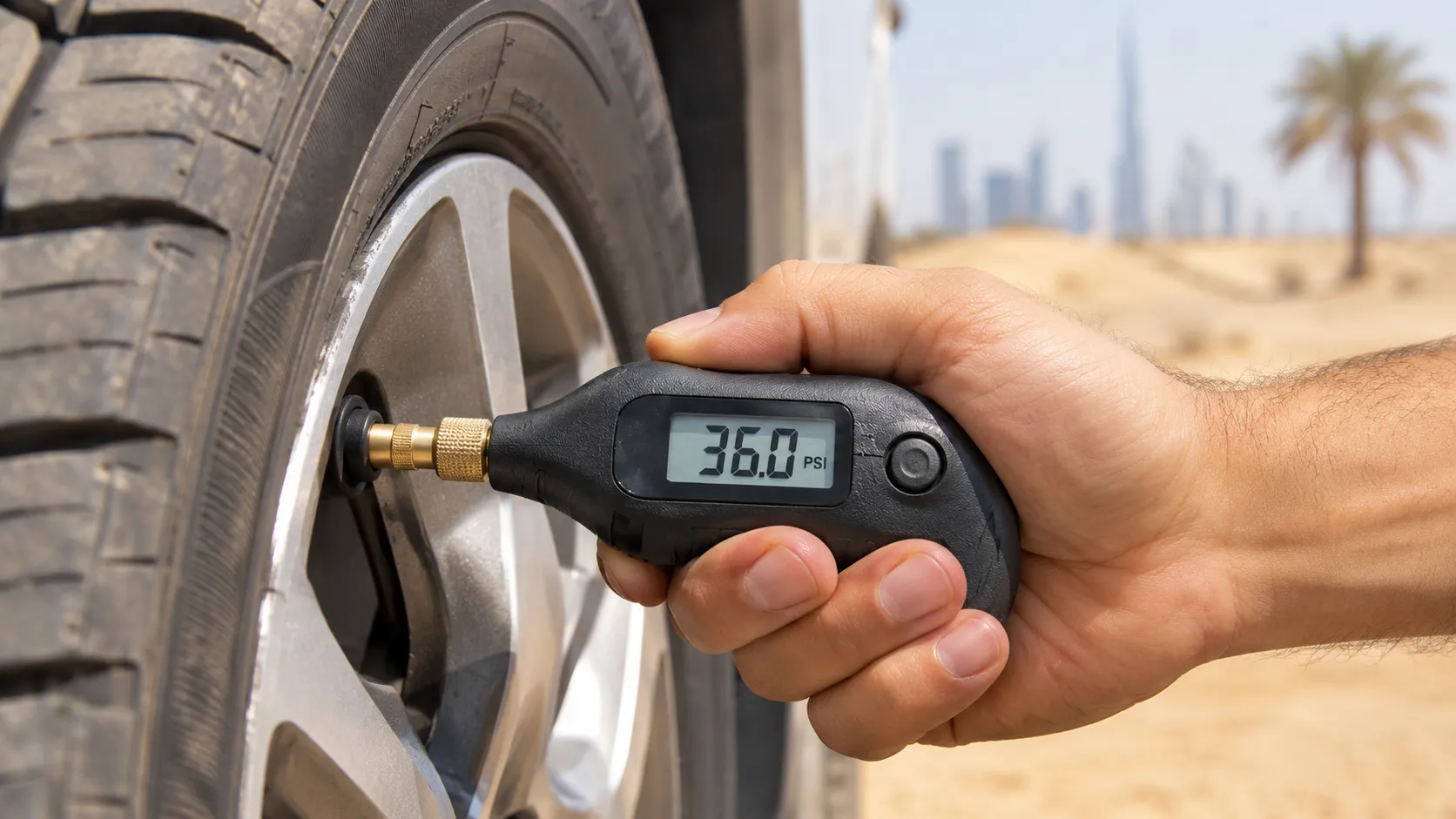
It costs from AED 29 for the whole car, and it is free with any other service we do. We also look at the tread, valves and sidewalls while we are there.
What's included
- Cold pressure reading of all four tyres and the spare
- Inflation or deflation to your door placard figure
- Valve core and cap check, with leaking cores replaced
- Quick visual check of tread depth and sidewalls
- Note of any tyre losing pressure faster than the others
- TPMS warning light check after adjustment
What affects the final price
The starting price of AED 29 (all 4 + spare (free with any other service)) is the minimum you'll pay. It can go up with:
- Free when added to any other service in the same visit
- Nitrogen inflation instead of air
- Faulty valve cores that need replacing
- TPMS relearn needed after the pressures are corrected
Signs you need tyre pressure check
- The TPMS warning light is on
- The car feels heavy or vague in the steering
- Fuel economy has dropped without explanation
- You have been on a desert trip and tyres were deflated
- It has been more than a month since the last check
- Before a long trip such as Dubai to Oman or Liwa
How we do it on site
- Read the placardWe check the pressure label on the driver's door frame or fuel flap for your car's correct figures.
- Measure coldEach tyre is measured with a calibrated digital gauge, ideally before the car has been driven far.
- AdjustTyres are inflated or deflated to the correct pressure, including the spare.
- Inspect and reportWe note any valve leaks, low tread or damage and tell you if a tyre needs further attention.
Why pressure changes so much in the UAE
Air expands as it heats. A tyre set correctly at 6am in a cool basement can read several psi higher by mid-afternoon after a drive on hot tarmac, which is why we always set pressure cold.
The reverse also matters. Tyres set while hot at a petrol station can end up under-inflated the next morning, which causes extra flexing and heat on the next drive.
What wrong pressure does to your tyres
| Condition | Effect on the tyre | Effect on the car |
|---|---|---|
| Under-inflated | Wear on both edges, heat build-up, blowout risk | Higher fuel use, slower steering |
| Over-inflated | Wear in the centre, harsher ride | Less grip, longer braking on wet or sandy roads |
| Correct | Even wear across the tread | Best grip, braking and economy |
How often to check
Check pressure at least once a month and before any long drive. In summer, every two weeks is better if you do a lot of highway driving.
- Use the door placard figure, not the maximum on the sidewall
- Check cold, before driving more than a few kilometres
- Include the spare
- Re-inflate straight after desert driving before hitting the highway
Tyre Pressure Check FAQs
How much is a tyre pressure check in Dubai?
Our mobile tyre pressure check starts from AED 29 for all four tyres and the spare. It is free if you book any other service at the same visit.
What is the right tyre pressure for my car?
Use the figure on the label inside the driver's door frame, fuel flap or owner's manual. Most sedans sit around 32–36 psi, but it varies by car and load.
Should I lower my tyre pressure in summer?
No. Set tyres to the placard pressure when cold. Letting air out of hot tyres leaves them under-inflated once they cool, which increases heat and wear.
Is nitrogen better than air?
Nitrogen leaks a little more slowly and is less affected by moisture, but the difference for normal road cars is small. Regular checks with ordinary air matter far more.
Why is my TPMS light still on after inflating?
Some cars need a short drive or a manual reset for the system to update. If it stays on, a sensor may be faulty and we can test it.
How often should I check tyre pressure?
At least once a month and before long journeys. In peak summer, every two weeks is sensible.